The Cook Family
Alexander & Anna Maria Cook
The Surgeon of the Fever Ship
A young surgeon from the south end of Arran sailed for Sydney in 1837 with his parents, his sisters, his brother and a bride of three weeks. By the time the ship came in under a yellow flag, the fever had taken his father, his mother, a sister and his wife; he was dangerously ill himself, and his brother had been put in irons.
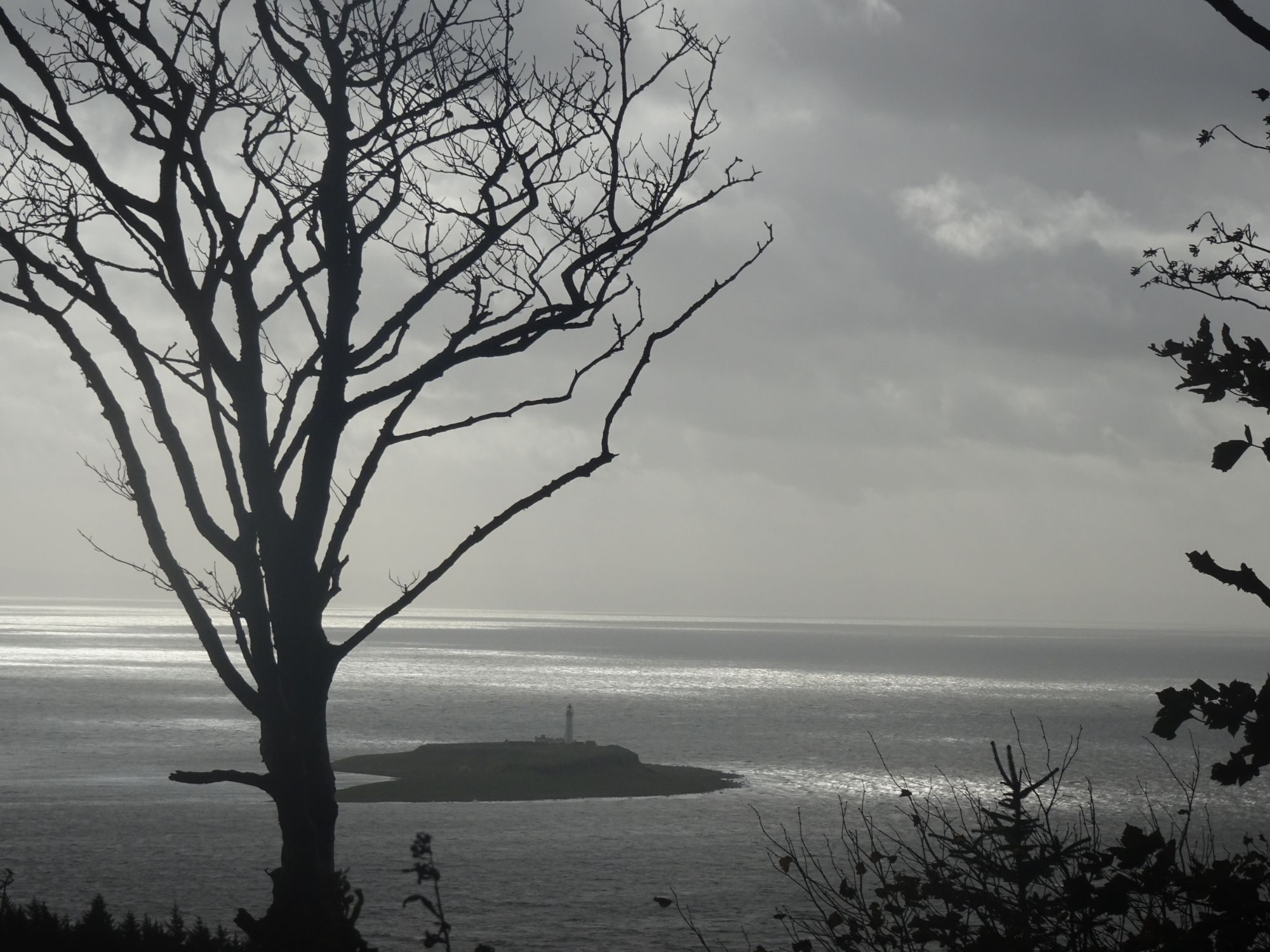
The south end of the Isle of Arran is a country of small farms running down to a rocky shore, with the Sliddery Water cutting through it to the sea and, across the Firth, the long low line of the Ayrshire coast. This is Kilmory parish, and it is where Alexander Currie Cook was born, in about 1810 — at ‘Laigh Kilmory’, according to the family’s own record — the son of John Cook and Mary Currie.1 When John Cook died in 1837 the Sydney papers described him simply as ‘from the Isle of Arran’.6 His daughter Mary had been born at Kilmory in 1814, so the family was still in the parish then.1
The Cooks were tenant farmers here, on the Duke of Hamilton’s estate, and the family tradition is that their farm was Glenree, at the head of the Sliddery Water a few miles inland from Sliddery. The present farmhouse still stands there, with the ruins of an older building beside it; no document has yet been found that puts John Cook’s family at Glenree, but the Cooks were certainly thick on the ground in this corner of the island. In the churchyard at Kilmory there are Cooks of Sliddery, High Claynod, Auchareoch, Torrylin and Shannochie, and a William Cook who kept the store at Kildonan.2
There were Curries too. Donald Currie, ‘late tenant in Kildonan’, died in 1831 aged seventy-six; two of his sons died at sea and one in Jamaica. Captain Alexander Currie ‘of the merchant service’ died in 1838 aged fifty-five. And there was a Captain Finlay Cook ‘of the merchant service’, born about 1779, about the same age as Alexander’s father.2 Alexander’s mother was a Currie, he carried Currie as his middle name, and his brother was called Finlay: the names on these stones are very much his family’s names. Exactly how they connect has still to be proved from the Kilmory parish registers.
A bride, a ship and a whole family
By 1837 Alexander was a surgeon — trained, it seems, in Glasgow, since his family later remembered him as ‘formerly of Glasgow’.123 On 26 August that year, at Ardrossan on the Ayrshire coast, he married Jane Campbell.3 She was very young — a native of the neighbouring town of Saltcoats — and they had three weeks together on land.6
That autumn the Rev. Dr John Dunmore Lang was filling bounty ships with Scottish emigrants for New South Wales, and one of them was the Minerva, 380 tons, master Thomas Furlong, lying at Greenock under the superintendence of Lang’s brother-in-law, Captain George MacAusland.4 Alexander signed on as her surgeon. With him went not only his wife but his whole family: his father John, his mother Mary, his sisters Mary and Margaret, and his brother Finlay. Among the other passengers were Highland and Lowland farming families from Kintyre, Islay, Skye, Kilmarnock and Saltcoats, a handful from Ulster, and a party of German Lutheran missionaries bound for Moreton Bay.45
The Minerva weighed anchor off Gourock at two in the morning of 13 September 1837. One passenger, the emigrant William Henderson, kept a day-by-day log of the voyage, and it is through his eyes that the Cook family’s journey can be followed.5
‘Our whole ship appears like an infirmary’
For the first ten weeks the doctor’s main worry was a Mrs McKinnon of Kilmarnock, struck down with inflammation within a week of sailing; on 22 September Henderson noted that there was ‘little hope of her recovery — Dr Cook had none’, and she died a week later. Otherwise the passengers were mostly well. They danced on deck, held a christening and a wedding, sighted Madeira, caught flying fish and albatrosses, and in the heat of the tropics found the air between decks ‘very foul’. The food, Henderson wrote later, was the worst of it: sandy sugar, decayed meal and flour, the poorest tea, and ship’s biscuit ‘blue moulded … black in the heart’.57
In late November, far south in the Indian Ocean, fever and colds began among the steerage passengers — ‘among whom was the doctor’s sister’. On 6 December two men died of typhus and were buried at sea the same evening. Then the fever reached the Cooks. ‘The Dr’s father died at 4 P.M.; he was buried instantly — stormy day’, Henderson wrote on 19 December. The next day: ‘at 1 o’clock P.M. the Dr’s mother died, and was thrown overboard at 2. — Dr’s sister taken to the hospital.’5
On 28 December the doctor himself fell sick. Two of the German missionaries took over the care of the patients. Mary Cook, who had seemed to be recovering, grew worse, and on New Year’s morning 1838 — ‘a bad omen … at the dawn of New-year’s morning’ — she died. She was twenty-three.51
A week later, with a dead passenger’s sea-chest found broken open and his watches, money and gold pins gone, Henderson recorded that ‘the Dr’s brother was one of the thieves’, and on 8 January ‘irons were put on the Dr’s brother’. The log never names him, but Finlay was the brother on board.5 The colony’s quarantine surgeon later admitted in print that two of the Minerva’s emigrants had been ‘found stealing during the passage’.9
On 11 January ‘Dr C. and wife’ were taken into the ship’s hospital. They sighted Van Diemen’s Land the next day. On 17 January ‘Mrs Dr C. … expired at nine A.M.’ Jane had been married to him for less than five months.56
Dr. Cook has been the greatest sufferer from the devastations of the fever. He has lost his wife, father, mother and sister on the passage, and both himself and his brother have been dangerously ill, but have nearly recovered.
Under the yellow flag
The Minerva raised the Sydney Heads light on the night of 22 January 1838. Next morning the pilot came alongside and, learning there was fever on board, refused to come aboard; he ordered the yellow quarantine flag hoisted and led the ship into Spring Cove, inside North Head. Fourteen people had died at sea. Twenty more were ill, ten seriously — ‘and among the latter, we regret to enumerate Dr. Cook, the surgeon of the vessel’.47 The ship’s surgeon was too sick to treat anyone, and a doctor had to be sent down from Sydney that night.5
Everyone was put ashore at the Quarantine Station and split into three camps — the sick, those exposed to contagion, and the cabin passengers — with no communication between them. It did not stop the fever. Over the next six weeks fourteen more died at Spring Cove, many of them people who had come ashore apparently healthy. The emigrants complained loudly of the doctors in charge, of the sick mixing with the well, and of the rations; the Board of Health came to inspect.7 Alexander and Finlay, both dangerously ill, slowly recovered.7
The healthy emigrants were released on 6 March and landed at the Dockyard with nowhere to go — the Government refused them even the empty Immigrants’ Barracks. The convalescents stayed on under the Colonial Assistant Surgeon, James Stuart. On 5 March they wrote him a letter of thanks ‘for your perseverance and kind attention to us while labouring under the fever’; among those who signed it were ‘A. C. Cook, Surgeon’, ‘Finlay Cook’ and ‘Margaret Cook’.8 The last of them were brought up to Sydney on Saturday 7 April 1838, ten weeks after the ship had arrived.85
Surgeon and druggist
Alexander was twenty-eight, widowed, and had lost his parents and a sister in a single month. Within a year he had put up his plate. In February 1839 he announced in the Sydney papers that ‘Mr. Alexander C. Cook, Surgeon and Accoucheur’ had begun practice ‘in the various branches of his profession’ at the shop of Mr J. Foss, chemist, in George Street, Windsor.10 An accoucheur attended childbirths.
By June he was back in Sydney, at George Street, and caught up in a public quarrel among the town’s doctors. A prisoner named Richard Roberts had died in Sydney Gaol after being bled from the temporal artery by the surgeon-druggist John Neilson, and the coroner’s jury blamed the treatment. Alexander had been called to Roberts twice and had advised the bleeding himself. He swore an affidavit in Neilson’s support — ‘I consider the treatment followed in this case was highly proper, judicious, and that of a skilful surgeon’ — and wrote to the papers that he felt himself ‘equally implicated … in so far as the verdict goes’.11
A month later Neilson took premises on Brickfield Hill, ‘about four doors from Liverpool Street’, and ‘entered into Partnership with Mr. Alexander Currie Cook, Surgeon’, to carry on a wholesale and retail chemical and drug business.12 Within weeks other doctors were using ‘Neilson and Cook’s, Brickfield Hill’ as a consulting room. On 20 September 1839 Alexander bought Neilson out, and ‘the Brickfield Hill Medical Repository’ became his alone.13
Anna Maria Rainy
Six days after he took over the shop, Alexander married again. His bride was Anna Maria Rainy, twenty-two, the second daughter of Mr George Rainy of George Street. They were married by special licence by the Rev. John McGarvie, minister of St Andrew’s Scots Church in Kent Street — the second Presbyterian congregation in Sydney, opened in 1835; in the register Alexander gave himself as ‘Alexander Currie Cook of Sydney, Widower, Surgeon’. The witnesses were William Hutchinson, Margaret Cook — his surviving sister — and four of the Rainys.14
Anna Maria had been born in London on 28 June 1817, in Swallow Street off Regent Street, Westminster, the daughter of George Rainy, a smith, and his wife Anne; she and three sisters, Sarah, Emily and Anne, were baptised together at St George’s, Hanover Square, in November 1821. The family emigrated in the early 1830s, and by 1842 George Rainy had been clerk of Sydney’s hay, corn and cattle market for more than seven years.22
A doctor in a raw town
In November 1839 Alexander was the doctor sent for when a Mrs Johnstone, injured in a fall, went into premature labour and her own surgeon, Gillespie, turned out to be drunk. ‘Mr. Surgeon Cook, of Brickfield Hill … immediately attended’, the Sydney Gazette reported, and found Gillespie ‘using language seldom heard beyond the atmosphere of the Rocks’; within a quarter of an hour of Alexander’s arrival Mrs Johnstone was dead. The case caused ‘a great sensation at Sydney’ and was reported as far away as Hobart.15
In April 1840 the new Medical Board, set up to decide who was qualified to give medical evidence at inquests, published its list of practitioners whose testimonials it had accepted: among them ‘Cook Alexander, Sydney’.16 The Board added ‘M.D.’ to the names of men who held that degree; it did not add it to his.
In January 1841 Alexander gave up the shop. A notice in nine Sydney papers thanked ‘his numerous friends and customers’ and announced that ‘he has disposed of his establishment to his brother Mr. Finlay Cook’, and that he would ‘henceforth confine himself entirely to the practice of his profession in all its branches’. Beside it ran Finlay’s own notice: he had ‘purchased the whole of his Brother’s Establishment’.17 It is the only record that calls them brothers in so many words.
Sued, nonsuited and held for debt
Alexander and Anna Maria’s first child, John Alexander, was born in 1841. The citizen roll of 1842 lists Alexander as the occupier of a house in Parramatta Street, in Phillip Ward — the road that is now the city end of Broadway.18 The colony was sliding into the worst depression of its short history, and in 1843 the family fell with it.
In August 1843 their landlord, George Segerson, turned Alexander ‘and his goods out of a house he had taken from him’. Alexander went to the solicitors Carr, Rogers and Owen, sued Segerson in the Supreme Court for trespass and briefed two barristers. When the case came on, on 8 November 1843, he was nonsuited — he had not proved his case — and was left liable for both sides’ costs. Each came to about £30 10s; he could pay neither.19
On 5 December 1843 he petitioned the Supreme Court as an insolvent — ‘Alexander Cook, of Parramatta Street, in the City of Sydney, Surgeon, now in Custody of the Sheriff’. He was in the debtors’ prison. His entire estate was ‘wearing apparel and household furniture’, valued at £5; he owned no land and was owed nothing; his only debts were the £61 1s 6d of costs from the lawsuit. Only his own solicitors and Segerson came to the creditors’ meeting on 19 December.19 It was the year his second son, James — the direct ancestor of this family — was born.20
The family stayed in Parramatta Street: the electoral roll of 1845–46 lists ‘Cook Alexander Curry’ there in a dwelling house.18 Their daughter Maria was born on 11 February 1845, Jane on 10 March 1847 and Margaret on 9 July 1849.20
To sea, and Whampoa
After 1846 Alexander disappears from the Sydney records. When his daughters were baptised, in 1853, his occupation was entered as ‘Mariner’ — a word suggesting that he had gone to sea as a ship’s surgeon, the trade in which he had first come to the colony.20
In February 1852 the Sydney Morning Herald carried a two-line notice: ‘Died, at Whampoa, on the 11th August, on board the ship Statesman, Alexander Currie Cook, Esq., surgeon, aged forty years, after an illness of fourteen hours.’21 Whampoa was the deep-water anchorage for the foreign ships trading at Canton. An illness that killed in fourteen hours, in a Chinese anchorage in August, was very probably cholera. The news had taken six and a half months to reach his wife.
Five children orphaned
Anna Maria outlived him by two years. She died in Sydney on 19 September 1853, aged thirty-six, and was buried in the new cemetery at Camperdown.22 Her children were twelve, ten, eight, six and four.
Twenty-six days after her death, on 15 October 1853, the three girls — Maria, Jane and Margaret — were baptised together at St Andrew’s (Church of England) by the Rev. George King, the register giving their parents as ‘Alexander & Maria Cook, Princess St, Mariner’.20 Their parents had married in a Presbyterian church; the girls were baptised into the Church of England, probably at the wish of whoever now took them in. Who raised the five children has not yet been discovered — perhaps the Rainys.
They grew up. Maria married Henry James Barrett of the Monaro at St Luke’s, Liverpool, in 1866; Margaret married Joseph Sindel of Queanbeyan at Adaminaby in 1872. Their wedding notices called their father ‘the late Alexander Currie Cook, M.D., of Sydney’ — ‘formerly of Glasgow’.23 James, the second son, named his own son James Alexander, born in 1872; and it is that grandson’s marriage to Frances Helen Poole that the next Cook chapter follows.
Arran, October 2019
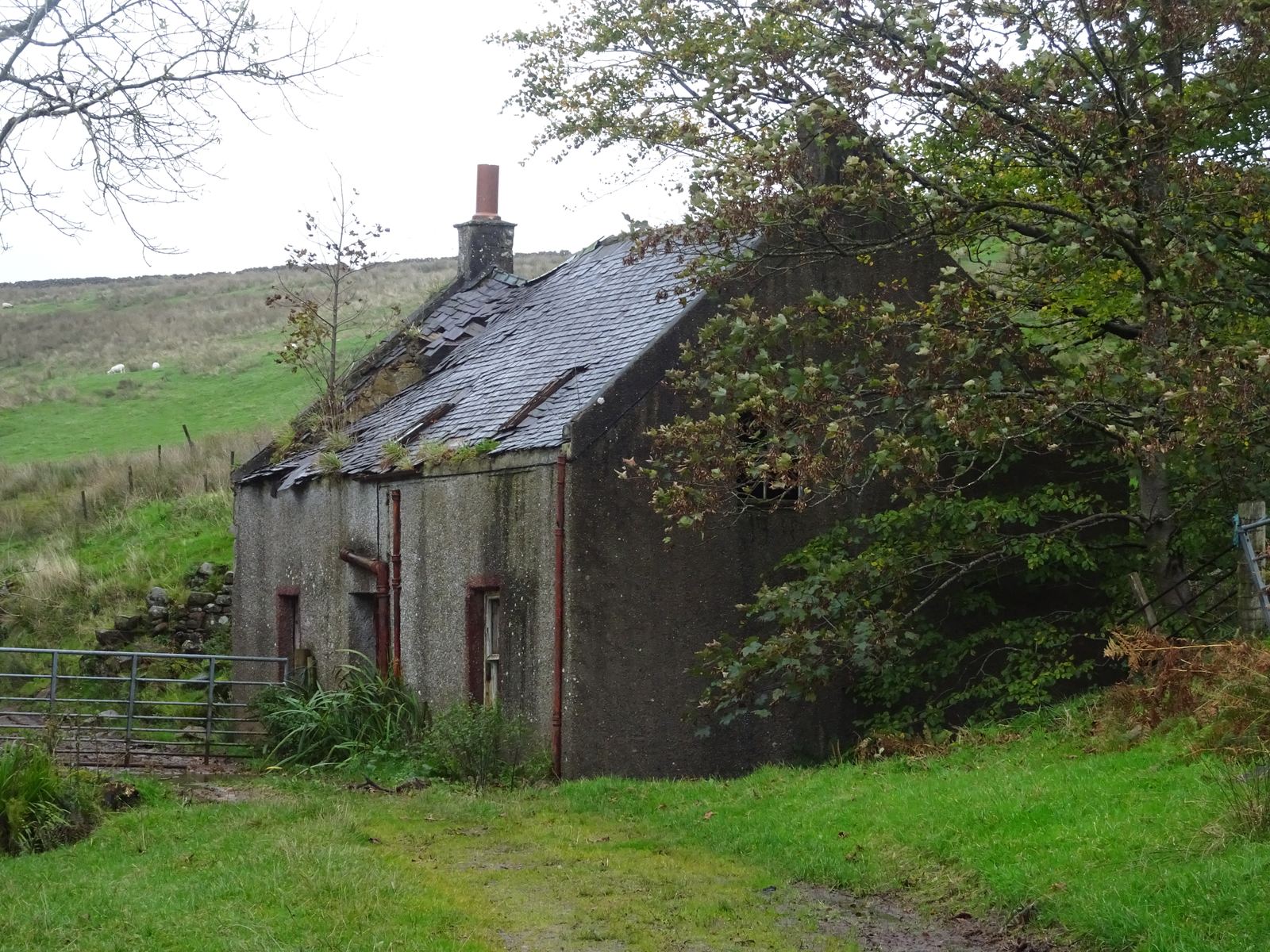
A family visit to the south end of the island the Cooks left in 1837 — its farms and glens, its shore and its churches. Use the arrows, swipe, or choose a picture below.
 1 / 16
A ruined cottage in the hills of south Arran — the kind of small farmhouse the Cooks would have known.· 2019
The Generation
The Five Children
Two sons and three daughters, born in Sydney between 1841 and 1849, all orphaned by 1853. James, the second son, carries this family’s line onward.
John Alexander Cook b. 1841
The eldest, born in the year his father gave up the shop on Brickfield Hill. Not yet researched beyond his birth registration.
Read their storyJames Cook 1843–1925
Born in the year his father was held for debt, orphaned at ten, and father of the James Alexander Cook who married Frances Helen Poole.
Read their storyMaria Cook b. 1845
The eldest daughter, baptised with her sisters a month after their mother’s death; married Henry James Barrett of the Monaro in 1866.
Read their storyJane Cook b. 1847
The second daughter. Possibly the Jane Cook, spinster, of Randwick, who died in 1936 — not yet proved.
Read their storyMargaret Cook b. 1849
The youngest, four when her mother died; married Joseph Sindel at Adaminaby in 1872.
Read their storyFamily on the Minerva
Alexander’s parents and brother
The parents who died on the voyage, and the brother who survived it and went to the goldfields.
John Cook & Mary Currie d. 1837
Tenant farmers of Kilmory parish who emigrated with all their children in 1837 and died at sea within a day of each other, a week before Christmas.
Read their storyFinlay Cook d. 1867
Survived the fever, was accused of theft on the voyage, took over his brother’s Sydney shop, and ended his days on the Turon goldfield at Sofala with a wife and at least seven children.
Read their storyThe Record
Sources & References
- 1
Birth and origins
Family record: ‘Dr Alexander Currie Cook … born 1811, Kilmory’, ‘place of birth: Laigh Kilmory, County of Bute’, parents John Cook and Mary (Currie). His age at death (forty, August 1851) gives a birth about 1810–11. Index entry: Mary Cook, born 1814 Kilmory, died 1 January 1838 at sea, daughter of John Cook and Mary. ‘Formerly of Glasgow’: Queanbeyan Age, 25 January 1872.
- 2
Kilmory gravestones, and Glenree
Family photographs, Kilmory churchyard, 8 October 2019 (42 images, 13 stones), and of Glenree farmhouse (DSC06325–06333). Ordnance Survey Name Books, Buteshire, 1855–64: ‘Glenrie’, an old farmsteading and grazing belonging to the Duke of Hamilton; Neil Cook of Slidderie and Daniel Cook among the authorities for local names.
- 3
First marriage
Scottish marriage index: Alexander Cook and Jane Campbell, 26 August 1837, Ardrossan, Ayrshire (FHL film 1041327). His 1839 marriage entry describes him as a widower.
- 4
The ship Minerva
Sydney newspapers on the ship’s arrival:
- Sydney Herald, 22 January 1838, p. 2 — the Minerva, with emigrants selected by Dr Lang, expected.
- Sydney Gazette, 25 January 1838, p. 2 — arrived with 235, typhus on board, Capt. McAusland superintendent, ‘Dr. Cook, the surgeon of the vessel’ seriously ill.
- Commercial Journal, 27 January 1838, p. 2 — arrivals; proclamation forbidding anyone to break quarantine.
- Sydney Herald, 29 January 1838, p. 3 — list of cabin passengers.
- 5
The voyage log
Journal of William Henderson (‘W. H., Emigrant’), ship Minerva, Greenock to Sydney, 12 September 1837 – 7 April 1838, with an editor’s introduction naming the surgeon as Alexander Currie Cook. Transcript in the family archive (“Log Book of Fever Ship Minerva 1838”); also published at freesettlerorfelon.com.
- 6
Official list of deaths
Sydney Gazette, 10 March 1838, p. 2 — ‘The Quarantine Station.—Spring Cove’ (Trove 2548521): seventeen deaths on board and fourteen at Spring Cove, including John Cook, Mrs Cook, Mary Cook, and ‘Mrs. Dr. Cook, a native of Saltcoats, 17th Jan.’
- 7
Reports from the Quarantine Station
Sydney newspapers, January – February 1838:
- Sydney Gazette, 30 January; 8, 10 and 13 February 1838.
- Sydney Monitor, 5, 7 and 14 February 1838 (7 February: the surgeon ‘has lost by death on the passage out, his father, mother, wife, and sister’; 14 February: the provisions).
- Colonist, 14 February 1838 (editorial on quarantine).
- 8
Release from quarantine
Letters and notices, March – April 1838:
- Colonist, 14 March 1838, p. 3 — convalescents’ letter of thanks to Dr Stuart, 5 March, signed by A. C. Cook, Surgeon, Finlay Cook and Margaret Cook.
- Colonist, 10 March 1838 — the healthy emigrants landed at the Dockyard.
- Sydney Gazette, 15 March; Colonist, 17 March; Sydney Herald, 19 March 1838 — Stuart’s reply.
- Sydney Gazette, 7 April 1838 — the remaining emigrants brought up from quarantine.
- 9
‘Found stealing during the passage’
Sydney Herald, 9 April 1838, p. 5 — letter of James Stuart, Surgeon in Charge, Spring Cove, 2 April 1838.
- 10
Windsor
Commercial Journal and Advertiser, 2 March 1839, p. 4 — Windsor Medical Repository, dated 23 February 1839.
- 11
The Roberts inquest
Affidavits of John Neilson, Alexander Currie Cook and Robert Rogers, sworn 27–28 June 1839, and Alexander’s letter to the editor: Colonist, 29 June; Sydney Monitor, 1 July; Sydney Gazette, 2 July; Commercial Journal, 3 July 1839.
- 12
Partnership with John Neilson
Advertisement dated Brickfield Hill, 25/27 July 1839, in the Sydney Herald (26 July – 7 August) and Colonist (31 July – 14 August 1839); Surgeon Bell’s notice, Colonist, 10 and 14 August 1839.
- 13
Brickfield Hill Medical Repository
Colonist, 21 and 28 September 1839, notice dated 20 September 1839.
- 14
Second marriage
St Andrew’s Church (Presbyterian), Sydney, marriage register no. 102, NSW reg. 3309/1839 (vol. V A), 26 September 1839. Notices: Sydney Herald, 2 October 1839, p. 2; Commercial Journal, 2 October 1839, p. 3.
- 15
The Gillespie case
Sydney Gazette, 9 November 1839, p. 2; Colonial Times (Hobart), 26 November 1839, p. 5.
- 16
Medical Board
NSW Government Gazette, April 1840, p. 338 — list of qualified medical witnesses under 2 Vic. no. 22.
- 17
The shop sold to Finlay
Notices dated Brickfield Hill, 14 January 1841, in at least nine Sydney papers, 19 January – 2 February 1841, e.g. Sydney Monitor, 20 January 1841, p. 2.
- 18
Parramatta Street
Citizen Roll, Phillip Ward, City of Sydney, 1842–3, no. 117; The Australian, 23 September 1842; Roll of Electors, Phillip Ward, 1845–6, no. 99, ‘Cook Alexander Curry’.
- 19
Insolvency
Supreme Court of NSW, insolvency file no. 1098, Alexander Cook, 1843 (NSW State Archives): petition and schedules, 5 December 1843; bill of costs of Carr, Rogers & Owen, August – November 1843 (Cook v. Segerson, plaintiff nonsuited 8 November 1843); minutes of the single meeting of creditors and affidavits of Robert Owen and William Barker, 19 December 1843.
- 20
The children
NSW BDM index and church registers:
- John A., reg. 1337/1841 (vol. 47), father Alexander C., mother Anne M.
- James, reg. 4510/1843 (vol. 47), father Alexander, mother Maria.
- Maria, Jane and Margaret: St Andrew’s (C. of E.), Sydney, baptisms 15 October 1853, nos. 514–516, by G. King — born 11 February 1845, 10 March 1847 and 9 July 1849, ‘Alexander & Maria Cook, Princess St, Mariner’; NSW regs. 995–997, vol. 39A.
- 21
Death at Whampoa
Sydney Morning Herald, 28 February 1852, p. 5 — Deaths.
- 22
Anna Maria Rainy
Records of her life and death:
- Baptism: St George, Hanover Square, Middlesex, 26 November 1821, no. 778 — Anna Maria, of George & Anne Rainy, Swallow Street, born 28 June 1817 (with her sisters Sarah, Emily and Anne).
- The Australian, 21 December 1842, p. 2 — City Council: George Rainy clerk of the hay, corn and cattle market ‘upwards of seven years’.
- Death: 19 September 1853, Sydney; burial Camperdown Cemetery (online memorial). Not yet checked against the NSW death registration.
- 23
The daughters’ marriages
Sydney Mail, 15 December 1866, p. 4, and Sydney Morning Herald, 22 December 1866, p. 9 (Barrett—Cook); Queanbeyan Age, 25 January 1872, p. 2 (Sindel—Cook).